Glass Bowl vs. Cane Banneton: Which Gives a Crispier Crust?
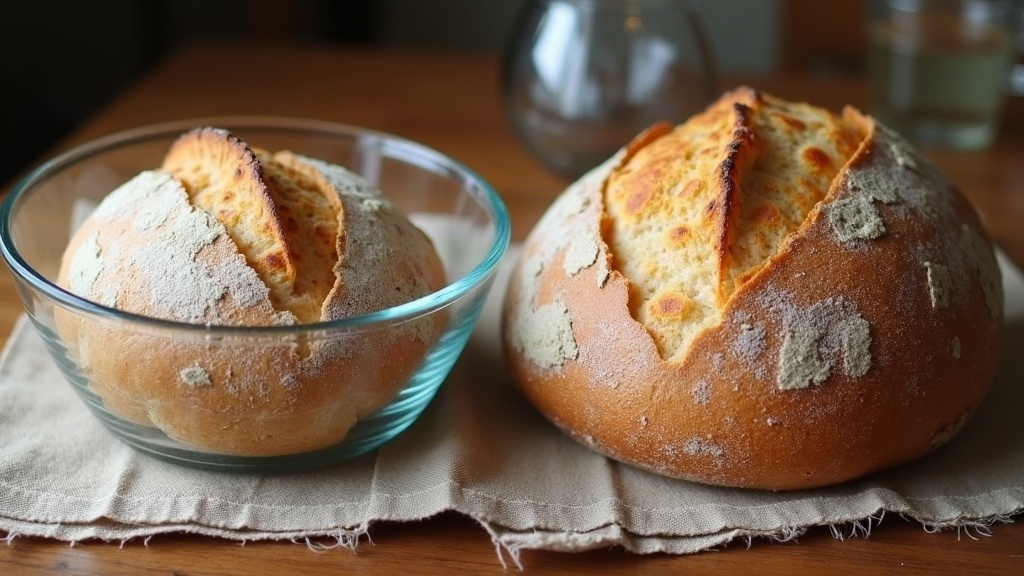
If you’ve been proofing your sourdough in a glass bowl lined with a tea towel and wondering whether an unlined cane banneton will finally get you that bakery-style, shatteringly crisp crust, the short answer is yes. But the reason has less to do with some mystical wicker property and more to do with plain old moisture management. An unlined banneton wicks surface moisture off the dough skin during that final proof, leaving you with a drier exterior that crisps and blisters far more dramatically in the oven than dough that’s been sitting in a non-porous glass bowl.
Why the Proofing Vessel Matters for Crust
Crust texture comes down almost entirely to how much surface moisture is sitting on the dough right before it hits a hot oven. A wetter surface steams longer before it sets, and that usually means a softer, flatter-looking crust. A drier surface sets fast, and as trapped gas pushes against that thin, taut skin, you get blistering.
- Glass bowl: Non-porous. Moisture released by the dough has nowhere to escape, so the surface stays tacky, especially with high-hydration doughs (think 75% and up).
- Unlined cane banneton: The wicker is porous and pulls moisture right out of the dough’s skin, leaving a drier, floured surface that holds its shape and crisps up nicely.
Does Unlined Wicker Really Make a Difference?
Yes, and anyone who’s run a side-by-side test notices it immediately. Dough proofed in an unlined banneton:
- Shows a visibly drier surface within 30 to 45 minutes of cold retard.
- Releases cleanly from the basket with barely any sticking, even with wetter doughs.
- Produces a more pronounced ear and more blistering after baking, because that taut skin resists spreading before it sets.
Glass bowls, on the other hand, are great for bulk fermentation. You can watch the dough rise and track bubble activity right through the sides. But if crust crispness is what you’re after, they’re the wrong tool for the final shaping proof.
The Floured Cane Trade-Off
Unlined wicker comes with its own quirks:
- Flour is non-negotiable. Rice flour (it resists gelatinizing and sticking far better than wheat flour) needs to be worked generously into every groove of a new banneton before you ever use it.
- New bannetons need breaking in. Expect some sticking on the first few bakes until the wicker builds up a light flour patina.
- Care is hands-on. No soap, ever. Just scrape out the dried flour and let it air-dry completely so you don’t end up with mold in the grooves.
Lined bannetons (cotton or linen liner) solve the sticking issue almost entirely, but you give up that drying effect. The result is a smoother, less rustic crust, closer to what you’d get out of a plain glass bowl.
Practical Comparison Table
| Factor | Glass Bowl | Unlined Cane Banneton |
|---|---|---|
| Crust crispness | Moderate | High |
| Surface blistering | Minimal | Pronounced |
| Dough release | Easy (smooth surface) | Easy once seasoned |
| Maintenance | Dishwasher-safe | Hand-care only |
| Best use | Bulk fermentation | Final shaping proof |
| Flour pattern on crust | None | Rustic spiral markings |
Which Should You Choose?
If your top priority is a crisp, blistered, bakery-style crust with those classic rattan spiral markings, go with the unlined cane banneton, it’s simply the better tool for the job. If convenience, easy cleanup, and keeping an eye on fermentation matter more to you, a glass bowl still earns its spot on the counter, particularly for bulk fermentation before shaping.
Plenty of experienced home bakers just use both. Glass bowl (or any clear, straight-sided container) for bulk fermentation, then the shaped loaf gets transferred to an unlined cane banneton for an overnight cold proof in the fridge. That combo gives you the best of both worlds: easy fermentation tracking early on, and a dry, blister-ready surface by the time you’re ready to bake.
Final Verdict
Unlined wicker genuinely produces a crispier crust than a glass bowl, and it’s thanks to moisture-wicking porosity, not some special material magic. If you’re chasing that dramatic, ear-popping crust you see in artisan bakery photos, picking up a 9-inch round or oval unlined cane banneton, properly floured and cared for, is one of the simplest upgrades you can make to your sourdough routine.